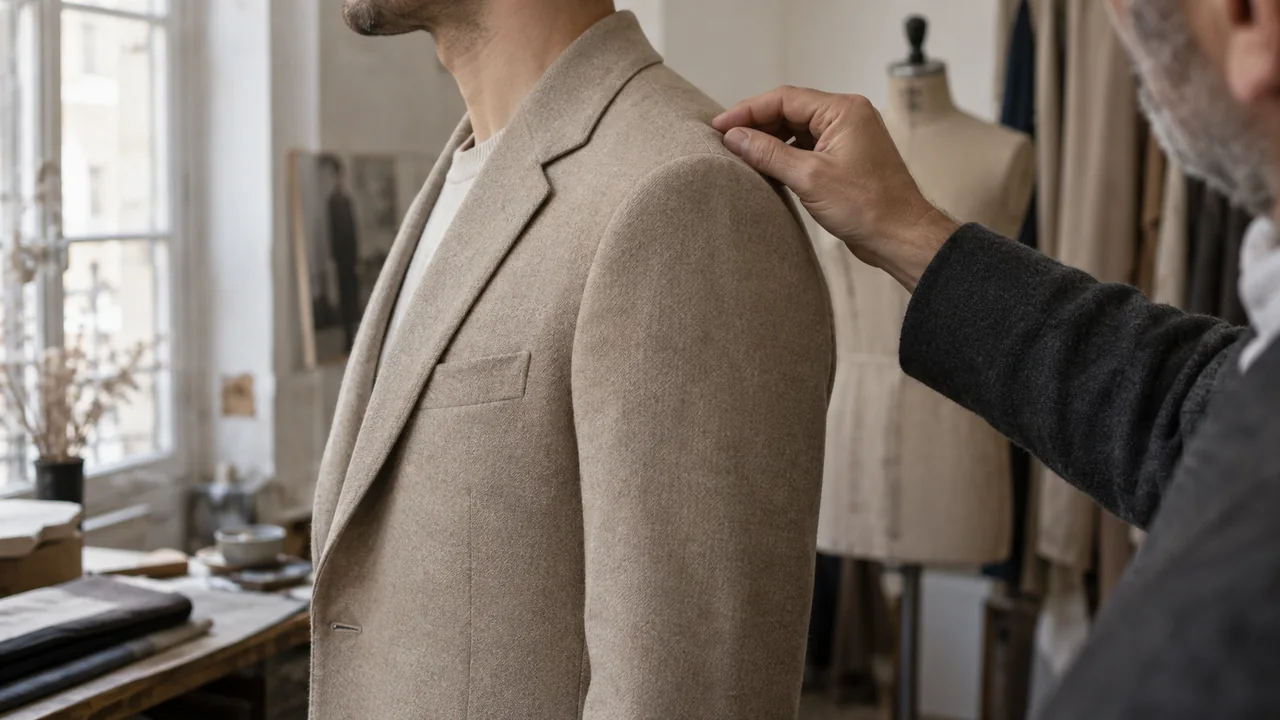
Measure a garment that fits
Measure trousers, a jacket or a top you wear often. Compare it with the seller’s chart instead of assuming one size has the same volume across brands.
Note the shoulders, chest or hips, length and inseam for the garment. One measurement cannot describe a fit.
Tell ease from a size that is too large
A relaxed cut leaves room built into the pattern. A garment that is too large may have dropped shoulders, unnecessary folds or a length that throws off the silhouette.
Raise your arms, sit down and walk. If the garment moves without pulling or twisting, you have more useful information than a still photo can give.
Look at how the pieces work together
A relaxed jacket often calls for a simpler bottom. Wide-leg trousers can work with a shorter or neater top. Judge the fit as an outfit, not on a garment alone.
Change one volume first. It makes the result easier to read and helps you avoid blaming the size for a proportion issue.
Check care and returns
A fabric can drape differently after washing or need special care. Read the composition and instructions before deciding that the fit is wrong.
The Accord Raccord mannequin suggests a combination; it does not predict size or the real drape.